Home Foundation Warning Signs – Putting Clarity Before Urgency
One of the best outcomes of a foundation repair evaluation is clarity before urgency.
For many Oklahoma homeowners, foundation concerns do not begin with a dramatic crack or a major structural scare. They begin with a question: “Is this something I should be worried about?” Whether it’s the inside of the home and the floor or minor separation gaps around an exterior door or window, some signs of a home in need of foundation repair beg that question.
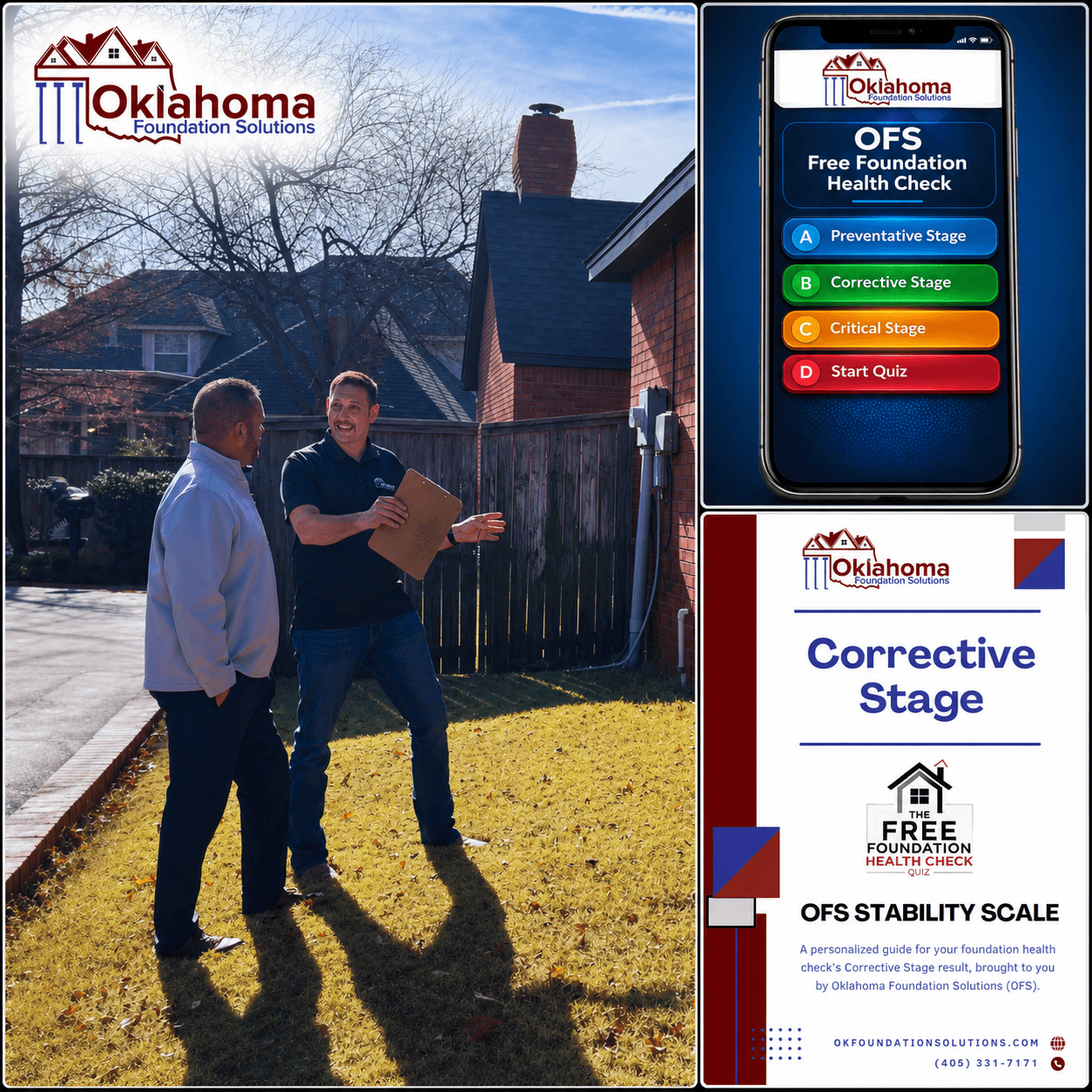
Those early concerns are exactly why the Preventative Stage on the OFS Stability Scale exists. It helps homeowners understand minor warning signs before those signs become harder to interpret. In a state where expansive clay soil, seasonal shifts, and crawl space support issues can all affect a home, getting answers early can be one of the smartest steps a homeowner can take.
A recent Oklahoma Foundation Solutions customer story detailed later here shows what that kind of early, educational evaluation should look like. The homeowner was not describing a stressful, high-pressure repair experience. They described an inspector who arrived on time, treated them with kindness, explained what was worth watching, recommended minor repairs, and answered every question with patience and expertise.
That kind of guidance is especially valuable in the Preventative Stage. Homeowners do not always need alarm. They need a clear understanding of what they are seeing, what it could mean, and what steps make sense for their home.
Quick Answer: What Does the Preventative Stage Mean?
The Preventative Stage on the OFS Stability Scale generally means the home is showing early or minor signs that should be watched, documented, and understood. These signs may include small brick cracks, slight separation gaps, uneven or sloped floors, a soft or bouncy spot while walking, or sheetrock cracks.
A Preventative Stage result does not automatically mean a major repair is needed. It means the homeowner is seeing enough to pay attention and may benefit from establishing a professional baseline. That baseline can make future decisions easier because the homeowner has a clearer record of what is happening now.
For Oklahoma homeowners, that can be especially valuable. Our homes are built in a state where soil movement, seasonal changes, and crawl space support conditions can all affect how a structure behaves over time.
A Real Customer Story Centered on Education
In the customer story featured in the attached OFS video, the homeowner’s review focused heavily on the quality of the inspection experience.
The customer shared:
“The OFS inspector was on time, very polite, and kind. He was very knowledgeable and explained in detail the need for concern or not. He educated me on what to look for in the future, recommended some minor repairs, and answered all my questions. I would highly recommend him!”
That review says a lot about how a Preventative Stage situation should be handled. The customer needed information, context, and guidance. They received an explanation instead of a rushed sales pitch.
For homeowners who are seeing smaller warning signs, that kind of approach is especially important. A minor crack or soft spot can create a lot of uncertainty. People want to know whether they are looking at normal home aging, a crawl space concern, foundation movement, or a sign that should be watched more closely.
The right evaluation should leave a homeowner feeling more informed than when the appointment began.
Why Early Foundation Signs Should Be Taken Seriously
Minor foundation warning signs do not need to create panic. They do deserve attention.
A small exterior crack may stay the same for years, or it may slowly widen. A floor that feels slightly uneven may remain stable, or it may become more noticeable over time. A crawl space support concern may begin subtly before it affects more areas of the home.
This is why monitoring is such an important part of the Preventative Stage. Homeowners can take photos, note dates, watch for changes, and pay attention to whether the same signs are appearing in multiple areas.
Some signs to monitor include:
- Small brick cracks around the exterior
- Slight gaps near windows, doors, trim, or frieze board
- Sheetrock cracks inside the home
- A soft, bouncy, or sponge-like feeling in one area of the floor
- Floors that appear slightly sloped or uneven
- Doors or windows that begin to stick
The goal is to avoid guessing. A homeowner does not need to diagnose the issue alone. A free OFS evaluation can help determine whether the concern appears cosmetic, structural, crawl space related, or something that simply needs to be watched.
How Crawl Space Concerns Fit the Preventative Stage
Crawl space concerns are often discovered later than exterior signs because most homeowners do not spend time under the home. Even when the issue begins below the floor system, the first signs may be felt inside the house.
A soft spot while walking, a slight bounce in the floor, or a small slope can be related to the way the home is supported underneath. In some homes, the span between support points may be too wide. In other cases, the condition of beams, joists, sill plates, or supports may need to be reviewed.
When these symptoms are still mild, the home may fit the Preventative Stage. That can be a good time to gather information because the homeowner may still have more options and more time to make a thoughtful decision.
A Preventative Stage home’a evaluation should answer practical questions:
- What is actually happening?
- Is the concern likely cosmetic or structural?
- Should the homeowner monitor the area?
- Are repairs recommended?
- What signs would suggest the issue is progressing?
- What should the homeowner monitor the next few months or years?
Answers to those kinds of questions help homeowners feel confident instead of confused.
Why Oklahoma Homes Need Local Foundation Knowledge
Oklahoma homes face conditions that are different from many other parts of the country. The soil can shift throughout the year, and those changes can affect slabs, crawl spaces, exterior walls, and interior finishes. A foundation concern in Oklahoma should be evaluated by someone who understands local soil behavior, local construction styles, and the signs that commonly appear in homes across the state.
That local knowledge is part of the OFS advantage. Oklahoma Foundation Solutions is not simply looking at cracks as isolated marks on a wall. The team looks at the home as a system: the exterior, interior, crawl space, floor behavior, visible movement, and the homeowner’s concerns.
For a Preventative Stage homeowner, that full-picture approach can prevent overreaction while still taking the signs seriously.
Why a Free Evaluation Can Be Helpful Even When the Problem Seems Small
Some homeowners wait to call because they are worried that a foundation company will immediately push a major repair. That concern is understandable. It is also why OFS focuses on education, transparency, and pressure-free evaluations.
A free foundation evaluation can give homeowners a professional baseline. If the home does not need work, that information is valuable. If minor repairs are recommended, the homeowner can understand why. If the signs need to be monitored, the homeowner knows what to watch for.
A good evaluation should explain the findings in clear language. It should help the homeowner understand what was observed, what the signs may mean, and what options are available. The homeowner should never feel rushed into a decision.
In the customer story featured in the video above, that educational approach is exactly what stood out. The inspector explained the concern, answered questions, and helped the homeowner understand what to look for in the future.
How the OFS Free Foundation Health Check Helps Homeowners Start
The OFS Free Foundation Health Check is a simple online quiz that helps homeowners organize the signs they are seeing. After answering a short series of questions, homeowners receive a result on the OFS Stability Scale.
For a Preventative Stage result, the quiz may point to early signs that deserve monitoring or a free professional evaluation. The result gives homeowners a clearer starting point before they decide what to do next.
The quiz can be especially helpful for people who are thinking:
“I see a few cracks, but I don’t know if they are serious.”
“One area of my floor feels different, but I’m not sure why.”
“I want to know what to watch before the problem gets worse.”
“I’d like a professional opinion without a high-pressure sales appointment.”
The Free Foundation Health Check is educational. A full on-site evaluation gives a more complete picture of the property and any repair options that may apply.
What Homeowners Can Learn From This Preventative Stage Story
This customer story shows that foundation repair does not always begin with a dramatic problem. Sometimes it begins with a homeowner who notices something small and wants a straight answer.
That is the value of the Preventative Stage. It gives homeowners permission to take early signs seriously without assuming the worst. It encourages monitoring, education, and practical next steps.
If you are seeing small brick cracks, slight separation gaps, sheetrock cracks, soft floors, uneven floors, or crawl space concerns, this may be the right time to learn more. Getting clarity now can help you protect your home, understand your options, and make decisions on your own timeline.