When the Signs Are Serious, Acting Sooner Can Protect Your Home and Your Budget
Crawl space foundation problems can reach a point where they are difficult to ignore. Floors slope noticeably. Doors no longer close correctly. Cracks spread across multiple walls. A bouncy area underfoot becomes a clear sign that the structure below may be weakened. In some homes, the wood beneath the floor have started to rot.
These are signs of the Critical Stage. At this level, the crawl space support system may already be failing in important areas, and the risk of further damage increases the longer the issue is left unaddressed.
The encouraging part is that Critical Stage crawl space problems can often be repaired. Oklahoma Foundation Solutions helps homeowners across Oklahoma stabilize homes with proven, engineer-approved repair methods. The best repair plan depends on the home, the damage, and the condition of the crawl space, but the same principle applies in most cases: the earlier a homeowner gets clear information, the more control they usually have over the next step.
What Critical Stage Crawl Space Warning Signs Look Like
At the Critical Stage, crawl space foundation movement is usually significant. Many homeowners notice several symptoms at once rather than one isolated issue.
As outlined in our guide to understanding and identifying foundation-related issues. Common Critical Stage warning signs in a crawl space home include:
- Sloped or visibly uneven floors: settling pronounced enough to notice while walking through the home or when objects roll across what should be a level surface
- A spongy or bouncy feeling underfoot: floor sections that give significantly when walked on, often because the support structure beneath has weakened or failed
- Slanted door facings: frames pulled out of square, sometimes to the point that doors no longer close or latch properly
- Sheetrock cracks on ceilings, above door facings, and along interior walls: drywall damage that has spread to multiple areas as movement has progressed
- Wood rot: deterioration of floor joists, beams, sill plates, or subfloor, often caused by long-term moisture in the crawl space
These signs should not be treated as simple cosmetic problems. They may point to structural issues beneath the home that will likely continue to worsen without the right repair plan.
What Causes Critical Stage Crawl Space Foundation Problems?
One common cause of crawl space foundation problems in Oklahoma is insufficient support between the center beam and the exterior stem walls. When that span is too wide or was not properly supported during construction, the floor joists and framing can gradually sag or warp under the home’s weight. Over time, that movement can lead to sloping floors, cracks, door problems, and other visible signs inside the home.
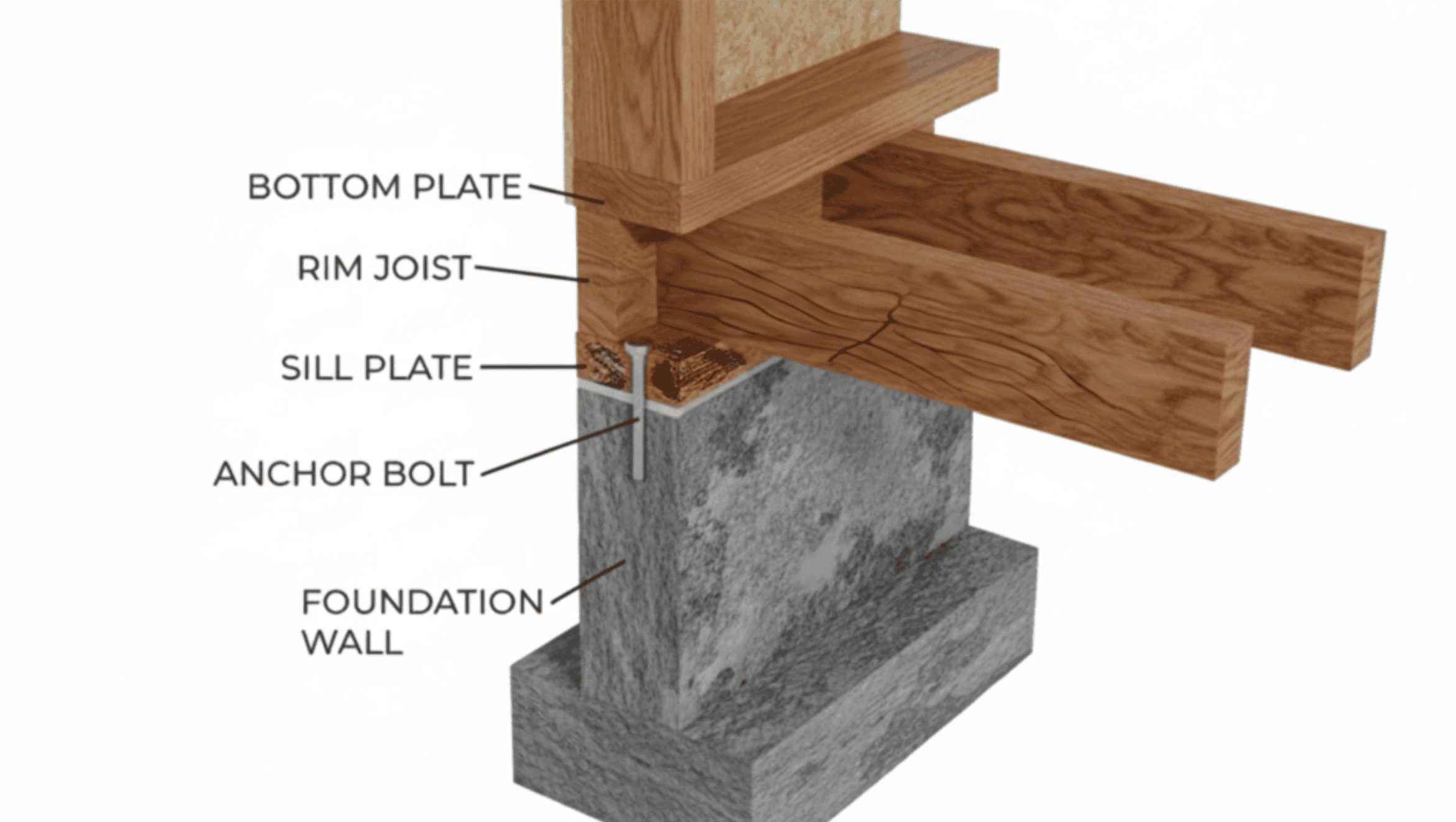
Moisture is another major factor. By the time a crawl space reaches the Critical Stage, moisture may have been affecting the structure for years. Persistent dampness can lead to wood rot in the joists, beams, subfloor, and sill plate. The sill plate is especially important because it sits on top of the foundation and helps support the home’s walls. When it begins to fail, the effects can spread through the rest of the structure. This is exactly why we covered the importance of crawl space moisture management in our guide to crawl space repair in Oklahoma, Part Two.
In many Critical Stage homes, the problem is not caused by one issue alone. Inadequate support and long-term moisture damage often work together. That combination can create the serious floor movement, interior cracking, and structural instability that homeowners eventually see inside the home.
How Critical Stage Crawl Space Repair Works
For Critical Stage crawl space situations, Oklahoma Foundation Solutions often installs an engineer-approved pier and beam system, the same proven approach used at the Corrective Stage but applied with greater scope to address the more extensive movement and damage present This approach adds support where the home needs it, redistributes the weight more effectively, and helps bring the floor system back to a more stable condition. You can learn more about this and related crawl space services on our crawl space repair page.
A typical installation process includes:
- Evaluation and planning: The OFS team inspects the weak areas beneath the home and determines where supports are needed.
- Base installation: Steel-reinforced concrete bases are installed at key points throughout the crawl space to create a solid footing.
- Pier and beam placement: New treated beams are secured with concrete block piers or screw jacks to support the floor system and redistribute the home’s weight.
- Completion: The work is performed safely, cleanly, and in line with industry standards. Many installations are completed within a few days, depending on the scope of the project.
At the Critical Stage, the repair plan may also include more than the support system. If wood rot has damaged joists, beams, subfloor, or the sill plate, those components may need to be repaired or replaced. Addressing that damage during the crawl space repair process helps restore the home’s structural integrity and can prevent larger repairs later.
A Critical Stage Crawl Space Story From Shawnee, OK
One Shawnee homeowner described his crawl space to our office as a mess. He and his wife had purchased their 1976 home ten years earlier, and they had dealt with foundation issues for much of the time they lived there.
During the evaluation, OFS found extensive damage in the problem area. The floor joists, sill plate, beams, and subfloor were compromised. Some of the existing supports did not have proper bases beneath them. Interior walls were dropping, and cracks had spread throughout the house.
The homeowner asked the question many homeowners ask when the damage looks overwhelming: “Can this be fixed?”
OFS created a comprehensive plan to stabilize the home and prevent further damage. The couple chose OFS because of the company’s communication, knowledge, and reputation. The project was substantial and came with a few unforeseen obstacles, but the team completed the work and delivered the promised result.
After the project, the homeowner shared:
“Our job turned out to be massive, and they handled it with grace and skill. They showed up every day and stayed with it until it was done. It feels so good to walk on a solid foundation again.”
That kind of result is why a professional evaluation is so important at the Critical Stage. Even when the damage looks severe, a qualified team can determine whether the home can be stabilized and what kind of repair plan is needed.
Interior and Exterior Movement: Understanding the Full Picture
Homeowners with Critical Stage crawl space issues may also notice exterior signs, such as brick cracks, gaps near windows, or displaced trim. This combination is common in Oklahoma homes.
In many homes, the interior crawl space structure and exterior foundation system are not structurally tied together. Because of that, they can move independently and at different rates. A floor may be dropping inside while the exterior shows separate signs of movement. Both areas deserve attention.
That is why a thorough evaluation should include the crawl space, the interior, and the exterior of the home. A complete assessment helps determine whether the repair plan should address one area or multiple areas.
The Cost of Waiting at the Critical Stage
Foundation problems at this level rarely improve without repair. If the original support issue remains, the floor system can continue to sag. If moisture is still present, wood rot can continue to spread. What may require a pier and beam system and targeted component replacement today can become a larger structural project later.
As detailed in our post on the benefits of scheduling foundation repair sooner, the financial case for acting early is compelling at every stage, and it’s most urgent at the Critical Stage. The most affordable time to address Critical Stage crawl space problems is always right now, before the damage deepens and the scope of the repair expands further.
What to Expect From a Free Evaluation at the Critical Stage
When OFS evaluates a crawl space home in the Critical Stage, the process is thorough and specific to the home. Here’s exactly what to expect when you schedule one: the evaluator reviews and makes a complete assessment of the crawl space structure, looks for signs of cracking, movement, wood rot, weak support, and structural stress, and explains the findings in plain language.
A quality foundation evaluation should feel educational. Homeowners should understand what was observed, what may be causing the damage, and whether the problem appears cosmetic, structural, or both.
At Oklahoma Foundation Solutions, recommendations are based on what the home actually needs. If no work is needed, OFS will say so. If a structural engineer should be involved, OFS can recommend that. If repair is appropriate, the homeowner can receive a clear explanation of the scope of work.
Not Sure Whether Your Home Is in the Critical Stage?
Some homeowners know right away that something serious is happening. Others are unsure whether the signs they are seeing are early concerns or signs of a larger structural issue.
OFS created the Free Foundation Health Check to help Oklahoma homeowners start with useful information. The guided tool helps homeowners identify which stage their foundation may be in before scheduling anything. If your home is still showing earlier symptoms, the Preventative Stage crawl space guide may be a helpful place to start.
OFS also discusses foundation issues through KFOR and other educational resources because homeowners deserve better than the old industry model where a “free evaluation” feels like a sales call. The OFS approach starts with education, a careful assessment, and honest recommendations.
Schedule your free foundation evaluation today
Frequently Asked Questions
Can a severely damaged crawl space foundation be repaired?
Yes. Many crawl spaces with extensive wood rot, dropped interior walls, and failed support systems can be stabilized with the right repair plan. An engineer-approved pier and beam system, along with replacement of damaged joists, beams, subfloor, or sill plate when needed, can restore structural support. The Shawnee project described above is one example of a Critical Stage crawl space that was successfully repaired.
What causes wood rot in a crawl space?
Wood rot is usually caused by long-term moisture. Poor drainage, inadequate ventilation, plumbing leaks, and persistent humidity can all contribute. When floor joists, beams, subfloor, or sill plates begin to rot, those components lose strength and may no longer support the home properly.
How much does Critical Stage crawl space repair cost in Oklahoma?
The cost depends on the scope of the damage, the number of supports needed, the accessibility of the crawl space, and whether wood components must be repaired or replaced. Critical Stage repairs are usually more involved than earlier-stage repairs. The best way to understand the cost for your home is to schedule a free, no-obligation evaluation.
Related Reading
- Crawl Space Foundation Problems: What the Corrective Stage Means for Your Home
- Early Signs of Crawl Space Foundation Movement: What Oklahoma City Homeowners Should Watch For
- The Ins and Outs of Crawl Spaces in Oklahoma, Part One
- The Ins and Outs of Crawl Space Repair in Oklahoma, Part Two
- Benefits of Scheduling Foundation Repair Sooner
- The Truth About Foundation Repair Warranties: What Really Matters
- Understanding and Identifying Foundation-Related Issues for Your Home — KFOR
- What to Expect From a Home Foundation Evaluation — KFOR
- Beyond the Price Tag: Understanding Foundation Repair Cost in Oklahoma — KFOR
- Stop Falling For The “Free Evaluation” Trap — KFOR